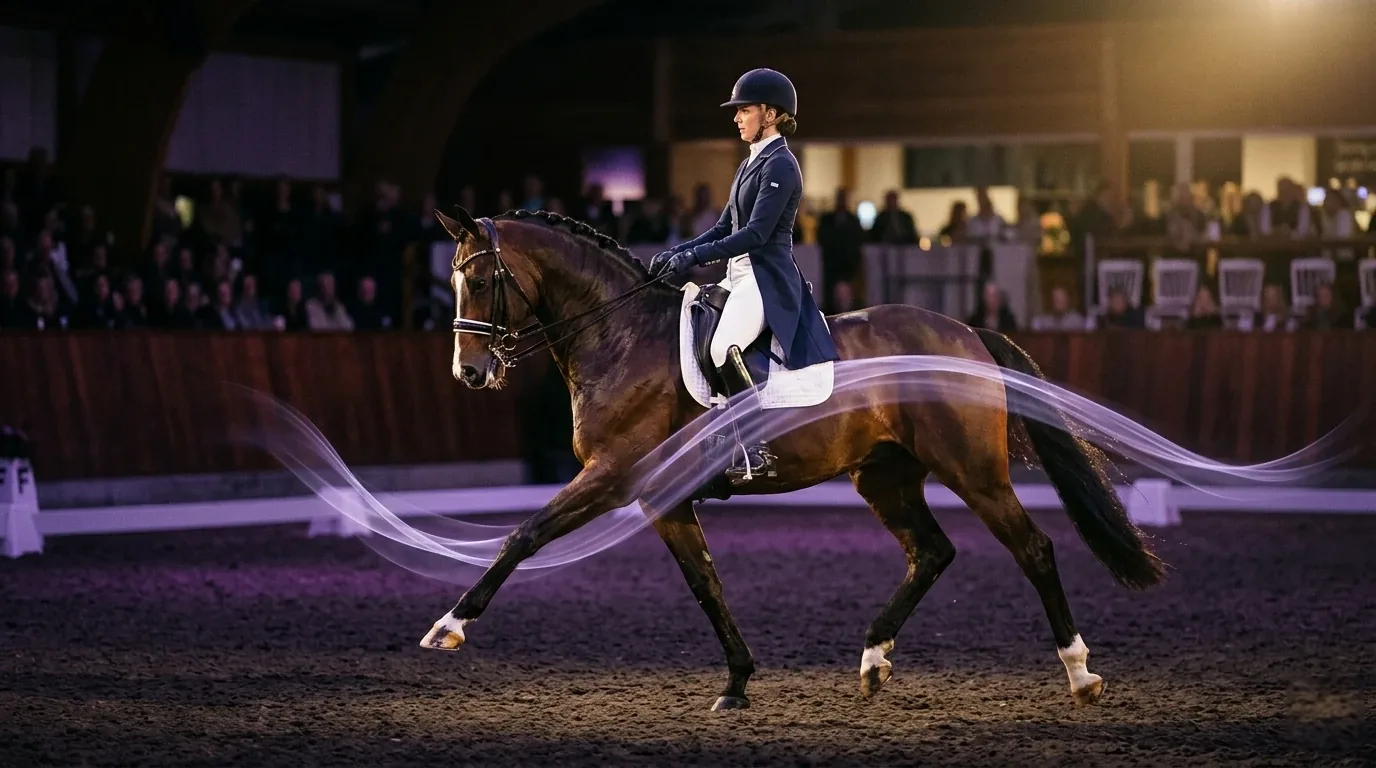
Ordering a freestyle is not buying a track off a shelf. You are handing over your horse, your test, and a date, and getting back music built to all three.
The good news is that ordering is simple once you know what a studio actually needs. The work is not filling in a long form, it is bringing the right few things: a clear video, your level, a rough direction, and enough time. Get those ready and the rest is a conversation. This is the checklist we wish every rider had before they message, in the order it matters.
Start earlier than you think
The single most common ordering mistake is leaving it too late. The edit itself is faster than most riders expect, our standard delivery is about three weeks, and rush is available when a date sneaks up. But the calendar time you really want is not for the editing. It is for living with the music and tweaking it, and, if your show is streamed, for sorting out the music rights in time.
So the honest answer to "when should I order" is the off-season, or at least well before your first show of the year. A freestyle is not a one-and-done. The best ones grow with the partnership, with the tempo reworked as the horse develops. Order early and you have room for that. Order the week before and you are stuck with the first version, whether it fits or not.
Send your video, with your choreography or without it
Here is where riders split into two camps, and both are completely normal. Some come with their choreography already built, the whole test designed. Others have nothing but a horse and an idea. Ordering works either way, you just send a slightly different video.
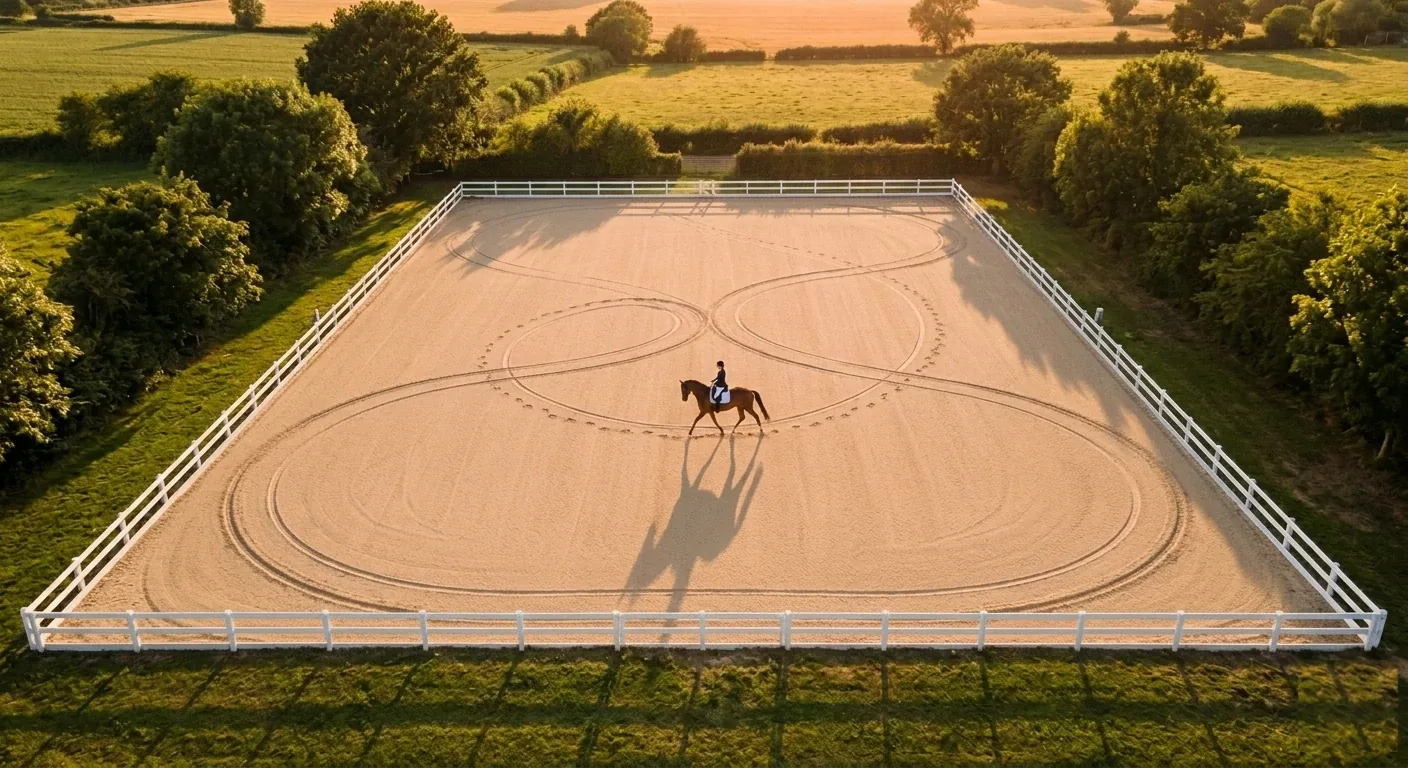
If you already have your choreography, the best thing you can send is one continuous video of the whole test, ridden in a regulation-size arena. The music is built to your choreography, so a full run lets us land it on every moment, the big extension, the pirouette, the final halt down the centerline.
A word on who should design that choreography, because it matters. Building choreography is something we do, and we are glad to. But when you can, build it with your own trainer. Your trainer knows you and your horse better than anyone, where the horse shines and where a weakness needs hiding, and a freestyle lives or dies on playing to exactly that. We then build the music around the test the two of you designed. Prefer us to design it, or design it together with you? We do that too, it is one of our services. There is no single right way in, only the one that fits where you are.
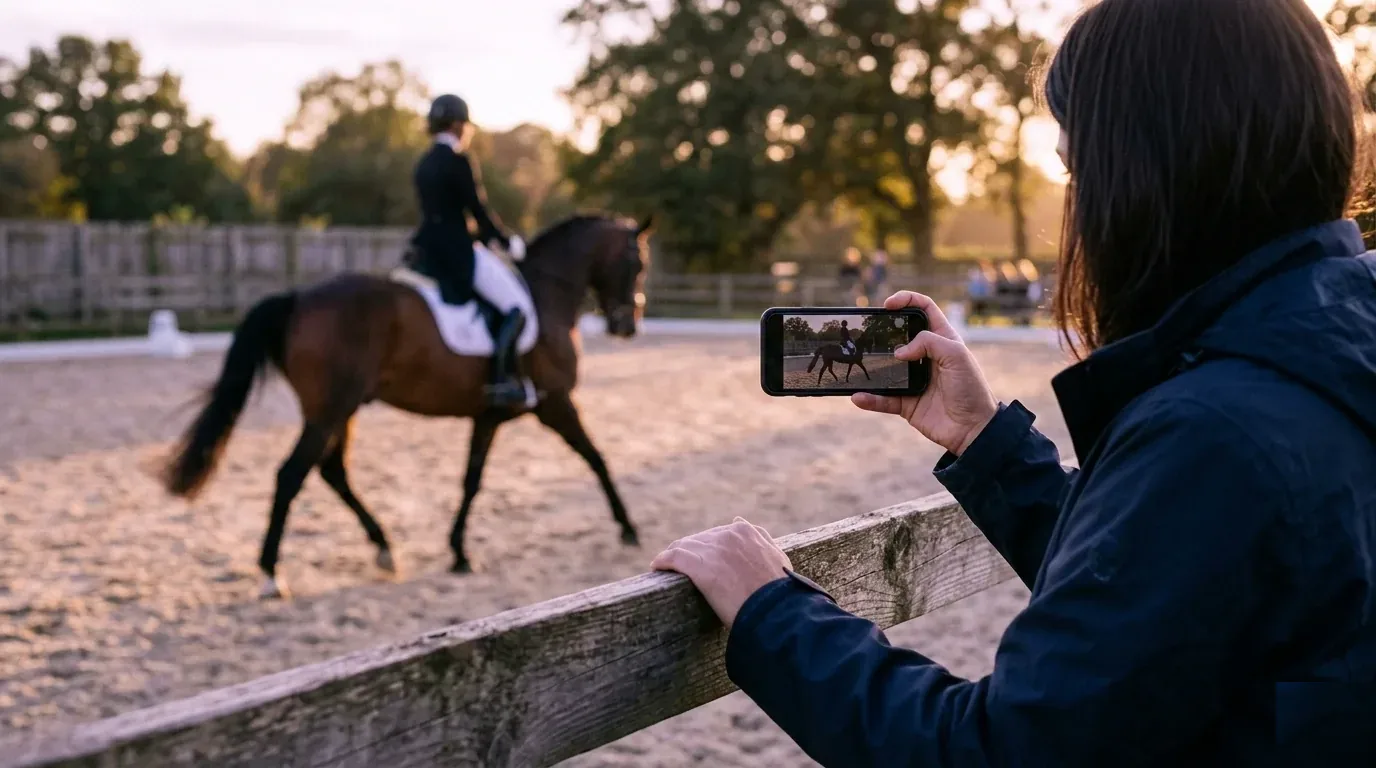
If you do not have your choreography yet, you can still start. Send a clip at each pace, both directions, with the horse and rider in frame, including the horse's legs, so the footfall is visible, and we will read your horse's tempo at walk, trot, and canter, suggest a direction, and send your offer. A steady working gait of about a minute per pace is plenty, and a brightly colored wrap on one front leg makes the footfall easy to count on playback.
One thing that quietly makes or breaks a video: keep the camera close enough. We need the horse to fill the frame, not float as a speck in the far end of the arena. Zoomed too far out, the footfall blurs and the tempo has to be guessed. Closer is always better than wider.
When it is time to build, though, the path is the same for everyone, and the order matters: build your choreography, film it, then we build the music to it. Design the test first, ideally with your trainer, get a clean video of it, and that video is what we sync the music to. We cannot sync music to a test we cannot see, so a video of the choreography is the one thing we always need before the build.
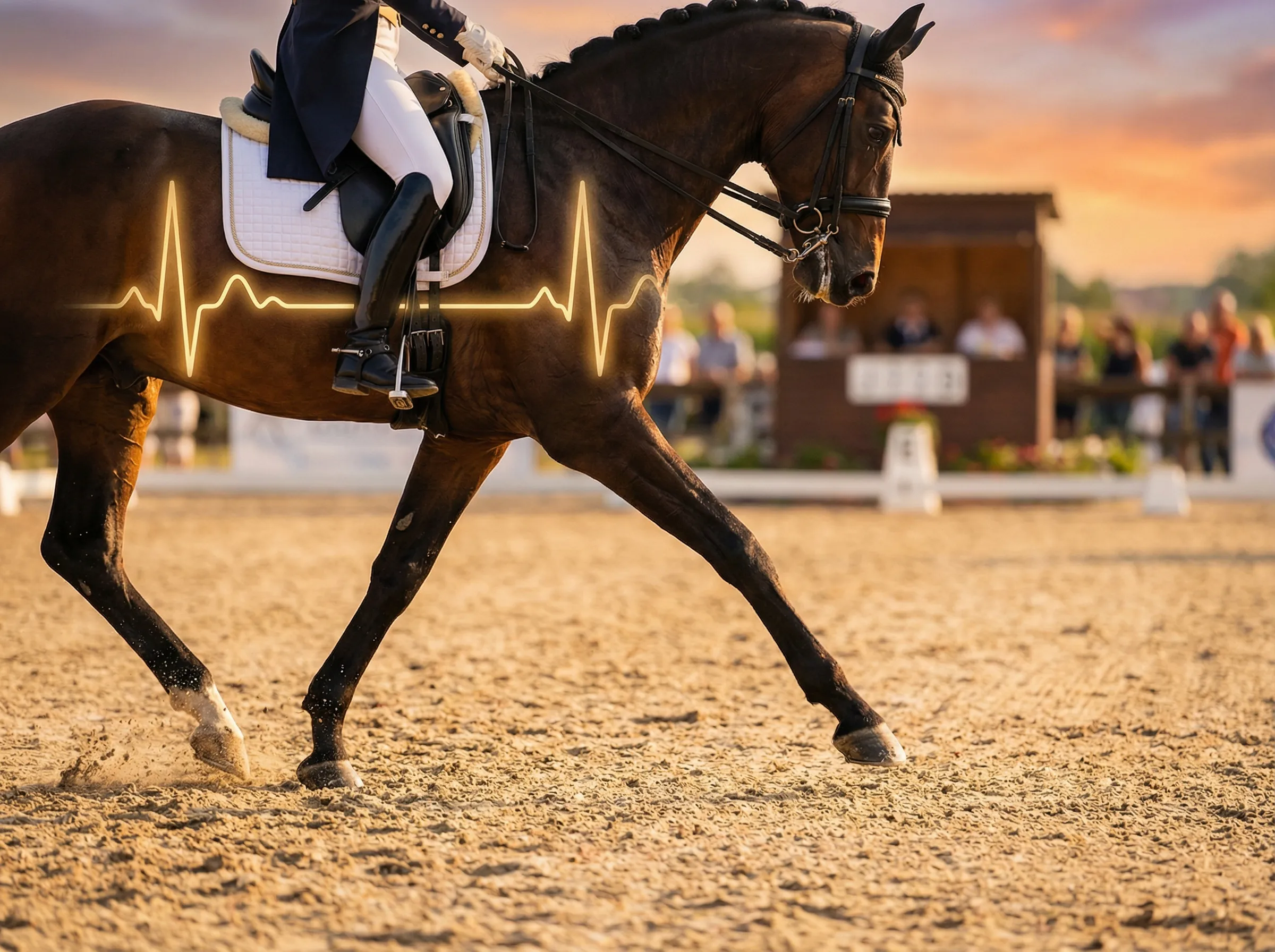
What you do not need is the technical side. You do not have to know your horse's BPM before you order, that is our job. We read the tempo from your video and tell you the numbers, you never have to arrive with them. If you are curious there is a full walkthrough in the BPM guide, and you can read the numbers yourself with the free DressageTunes BPM finder, but it is optional. The whole point of working with a studio is that you bring the horse and we handle the rest.
Know your level and your test
Tell us your level, because it sets the frame for everything. The level decides which paces the music has to cover, how long the test runs, and which movements are compulsory. A freestyle still has to include every required element for your level, so the choreography and the music are built around them.
One scoring detail worth knowing when you plan, because it shapes the brief: when you perform a movement more than once, each time is marked, and those marks are combined into one score for that movement. Repeating a movement does not earn automatic extra credit, and overdoing it can actually pull your choreography mark down. So show your horse's strengths where they look their best rather than padding the test with repeats, and build the music to peak on those moments. If you are not sure of your level or test, say so, we will confirm it from your video.
Bring a direction, not a finished song
You do not need to arrive with the perfect track picked out. In fact it is better if you do not, because the surest way to end up disappointed is to fall in love with a song before anyone has checked whether it fits the horse. What helps far more is a direction: a genre or mood you are drawn to, a feeling you want, maybe one or two reference tracks for the vibe. Plus an honest read on your horse's character, big and powerful, light and elegant, hot, or steady.
From there the order is always the same, and it is the opposite of how most people start. Tempo first, then the horse, then the track. Music has to match your horse's beat and suit the horse the judge actually sees, before the question of which song even comes up. That whole craft, matching the music to the horse, is its own guide: how to choose your freestyle music. For ordering, the takeaway is simpler. Bring a feel and trust the process for the rest.
How ordering actually works, step by step
Once you have those things ready, the process is short and the conversation lives on WhatsApp. Here is the whole path.
- Send your video. A short clip, your full choreography if you have it or just all the paces, so there is something to choose tracks against. Plus your level and a line on your vision. That is enough to begin.
- We read it and reply. Within a day, and free, you get your BPMs per pace, a music direction we think fits your horse, and a specific offer for your level. No quote request, no commitment, no waiting.
- Agree on the direction. Genre, mood, recognizable tracks or something original, and which moments to build toward. This is where your taste and our read of the horse meet.
- We build and edit. Tracks are chosen and locked to your horse's exact BPMs, then cut and synced to your choreography halt to halt, with clean transitions and the big moments landing where they should.
- You review a draft. You ride to it, you live with it, and you tell us what to change.
- We deliver. The finished audio, plus a practice video with the music laid over your test so you can see and hear the sync. Files in the formats your show accepts.
If you would rather lay it all out up front instead of going back and forth, the guided questionnaire walks you through the same questions in a few minutes, and we reply with the same BPM read, direction, and offer.
Revisions are part of it, not a sign something went wrong
A freestyle almost always needs a tweak after you ride to it, and that is normal. The usual trigger is tempo: a horse is often more forward at a show than at home, so a beat measured in training can need a nudge once you ride the real thing. Sometimes a track just does not flow the way it looked like it would, and it is better to swap it than to live with it. Sometimes the choreography shifts and the music has to follow.
This is why we keep revisions open, including after your show. The freestyle should keep fitting as the horse develops, not freeze on delivery day. One thing to keep in mind when you order: because the music is timed to your specific choreography, a big change to the choreography after delivery usually means a real re-edit rather than a small tweak. So lock the broad shape of the test before the final build if you can.
A note on music licensing, especially for streamed shows
This is the part riders worry about most, and the reality is more reassuring than the worry. The rider is responsible for competing with properly licensed music, but at most national shows you are already covered: the organizer or the federation holds a blanket license over the music ridden in competition, so there is nothing for you to clear.
The catch is streaming. When a show is streamed or broadcast, that blanket usually does not stretch to cover it, and further licensing is required. An uncleared commercial recording on a stream can be muted, dubbed, or pulled, so a ride you worked months on can go out silent or not at all. This is where original music earns its place: music with no third-party rights, a Signature Composition or licensing-safe tracks, stays clean wherever you compete, stream or no stream. If streaming is on your horizon, tell us early and we will steer the music to keep it clean.
The flip side is reassuring: you can reuse a freestyle across as many shows as you like, and upgrade or change the music between them. Some national bodies just ask you to re-file a short music-record form when the music changes, so check your federation's rules.
The mistakes that cost riders most
Almost every ordering regret comes down to one of a few things. Leaving it too late, so there is no room for revisions or licensing. Picking a song before checking the tempo, then forcing the horse to fit it. Choosing music you love in the car rather than music that suits the horse in the arena, the two are rarely the same. If you are having us design the choreography too, asking for more difficulty than the horse can carry cleanly, which pulls down several marks at once. And sending footage we cannot read, the horse too far from the camera with no footfall in frame, so the tempo has to be guessed. None of these are hard to avoid. They just have to be avoided before the build, not after.
The short version: your ordering checklist
Have ready
- A clear video at each pace, both directions, footfall in frame.
- A continuous run of your choreography, if you have one.
- Your level and test, so the music covers the right paces and movements.
- A direction, genre, mood, a reference track or two, and an honest read on your horse's character.
- Time. Order in the off-season, and budget extra for licensing if your show is streamed.
Avoid
- Ordering the week before the show.
- Locking in a song before anyone has checked the tempo.
- Choosing music that suits you but not the horse.
- Sending footage with no visible footfall.
- Counting on commercial tracks for a streamed show without clearing them first.
That is the whole of it. Bring those few things and ordering is the easy part. There is no quote to request, the price for every level is published, so see the services and pricing by level, or just send your video and we will take it from there.