Most freestyle music is chosen the wrong way round, a song first and the horse second. Turn it around. The horse comes first.
The right freestyle music does two things at once. It matches your horse's tempo at every pace, so the music moves when the horse moves. And it matches what the judge actually sees, the size, the power, the character of the horse in front of them. Get those two right, hold one clear theme across the whole test, and you are most of the way there. Everything below is how to do it, from a studio that builds custom freestyles for a living.
It is worth getting right, because after riding a good test, the music you pick is the biggest lever you have on the score. Across the national and international score sheets, music, sometimes split into music and interpretation, and choreography are the artistic marks that carry the most weight, scored at a coefficient of three to four. Music will not rescue a weak test, but among the things you choose rather than ride, nothing moves the score more.
What you hear has to match what you see
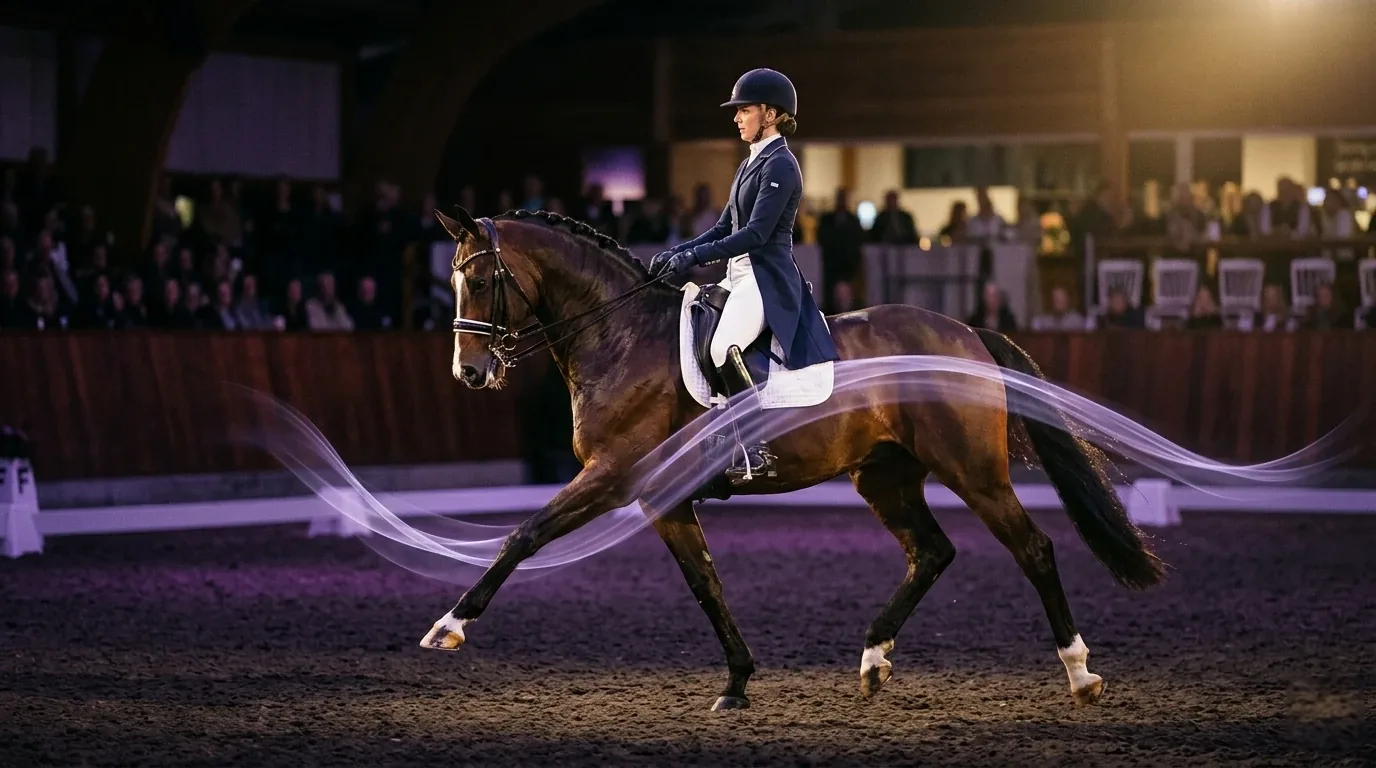
This is the rule everything else hangs on. The music has to match the horse the judge is looking at. Grand, dramatic music on a flat, modest horse is too much, the sound writes a check the movement can't cash. Light, pretty music on a big, powerful horse sells the horse short. The score sheet says the same thing in plainer words, the music should suit the type and character of the horse. When what they hear matches what they see, the judge believes the horse is dancing to it. When it does not, the music fights the picture.
So start from your horse, not from a playlist. A powerful warmblood and a light, elegant horse want completely different music. Choose for the horse in front of you, its size, its power, its way of going, not the song stuck in your head.
Get the tempo right before you fall in love with a song
The most common mistake in freestyle music is picking a song you love, then trying to make the horse fit it. It is backwards, and it never quite works. Tempo comes first.
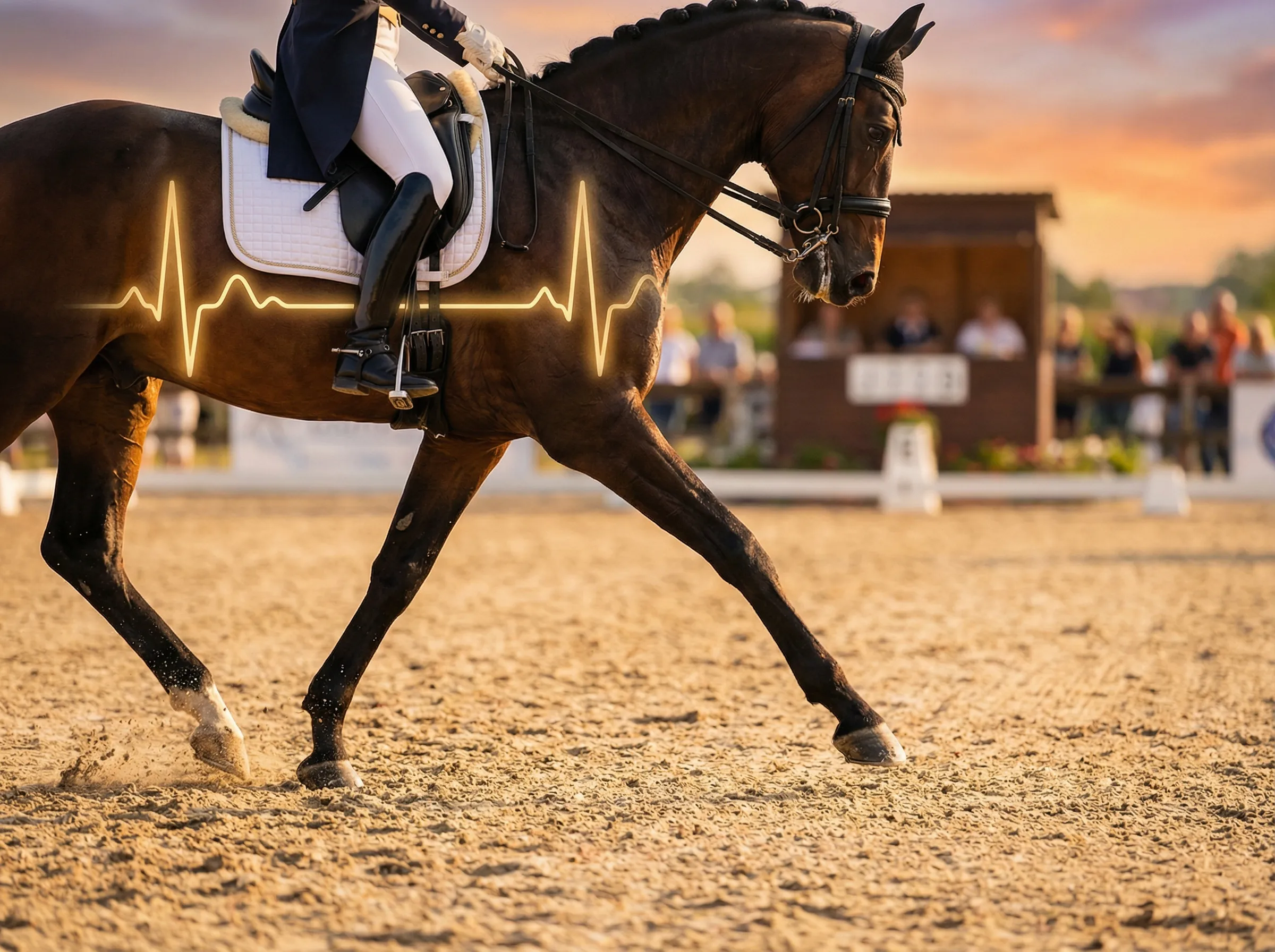
What matters is the underlying beat: do the horse's hooves land in time with the music? The standard is simple, the hooves should hit the ground in exact time with the downbeat. The time signature itself can vary, plenty of music that is not a plain marching one-two still lines up under a trot or canter, what counts is that the beat falls with the footfall. A track with a great groove at the wrong speed never will.
Tempo also works in multiples. Music at half or double your horse's beat, sometimes even a quarter or four times it, still lines up with the footfalls, because the beats stack evenly. That is a tool, not a trick. For a hot, explosive horse, a slower, half-time feel can settle the whole picture while the beat still lands on every step.
Every pace has its own tempo, so measure your horse before you shortlist anything, and do not trust the generic numbers online, your horse is not the average. Read your horse's BPM from a video, the free DressageTunes BPM finder gives you walk, trot, canter and passage. One thing to keep in mind: a horse is often more forward at a show than at home, so a tempo measured in training may need nudging to the rhythm your horse actually shows in the ring. We build the music for the show, and we keep revisions open afterwards for exactly this reason. There is more on measuring, and the ten-percent window where music still stretches to fit, in the BPM guide.
Pick music you love, it shows
Once the tempo works, choose from the tracks you genuinely love. Partly because you will school to them for weeks and hear them a hundred times before the show, and if you are tired of a track in a week it was the wrong one. But the real reason is that it shows. When you ride to music you love, you ride differently, and the judge and the crowd feel it. Emotion carries. A freestyle is a performance, and a performer who believes in the music is always better than one counting beats.
Give every pace its own character, with one theme holding it together
A freestyle is not one song playing under the whole test. Each pace wants its own character, and that character should fit your horse. A bouncy trot wants bouncy music. The canter needs to roll. The walk is the breath, the moment the test settles before the next big movement. The right trot track can make a good trot look more expressive to a judge, the wrong one can flatten it.
But the pieces still have to belong together. The score sheet rewards a single, recognizable theme, music drawn from one genre or style, over a disjointed pile of clips. So vary the character pace to pace, then hold it together with one thread, the same world of sound from the first halt to the last. One story, not one song.
Why we reach for orchestral instrumental covers
Vocals are allowed, the rules permit them. We still lean instrumental almost every time, and it is a deliberate choice, not a rule. Dressage is a global sport. A judge in Germany, a judge in the Netherlands, a crowd in the United States, they do not all share a language, and a lyric only lands if you understand the words. Let the music tell the story and it speaks to everyone in the arena.
But not just any instrumental. There is a real difference between an orchestral instrumental cover and a plain instrumental or karaoke version, and it matters more than most people think. In the original song, the singer's voice is not decoration, it is a main line of melody sitting on top of the band. Strip the vocal out, which is what a karaoke or instrumental track does, and that lead melody is simply gone, something feels missing. An orchestral cover puts an instrument in the singer's place, a violin carrying the tune, a full orchestration filling the space, so the melody you remember is still there, just without words. Nothing is hollow.
When a lyric is part of why a piece moves people, we bring the original vocal back, but only at the moment it earns, usually a final extension down the centerline. It does not always fit, so we do not force it. Used once, in the right place, a returning voice can lift the whole ride. Our music library is built this way, hand-picked orchestral instrumentals chosen for dressage freestyles specifically, the kind of tracks that keep the melody and lose the language barrier.
A song they know, or one made for your horse
There is a spectrum here, and it is worth deciding where you want to sit. At one end, music people recognize on the spot, a famous theme the crowd names in a few bars. In the middle, tracks that feel familiar without being obvious. At the other end, original music written for your horse and no one else.
A recognizable track can carry a crowd, and it is the easy, affordable route, a Custom Edit of existing orchestral covers locked to your horse's tempo. Original music, a Signature Composition, costs more and earns its place at the top levels and any time your shows are streamed. Streamed and broadcast competitions can mute or flag commercial recordings, and stricter national licensing rules apply in some markets, so original music with no third-party rights stays clean wherever you compete. If you are not sure where you sit, that is one of the first things we work out together.
No background music, ever
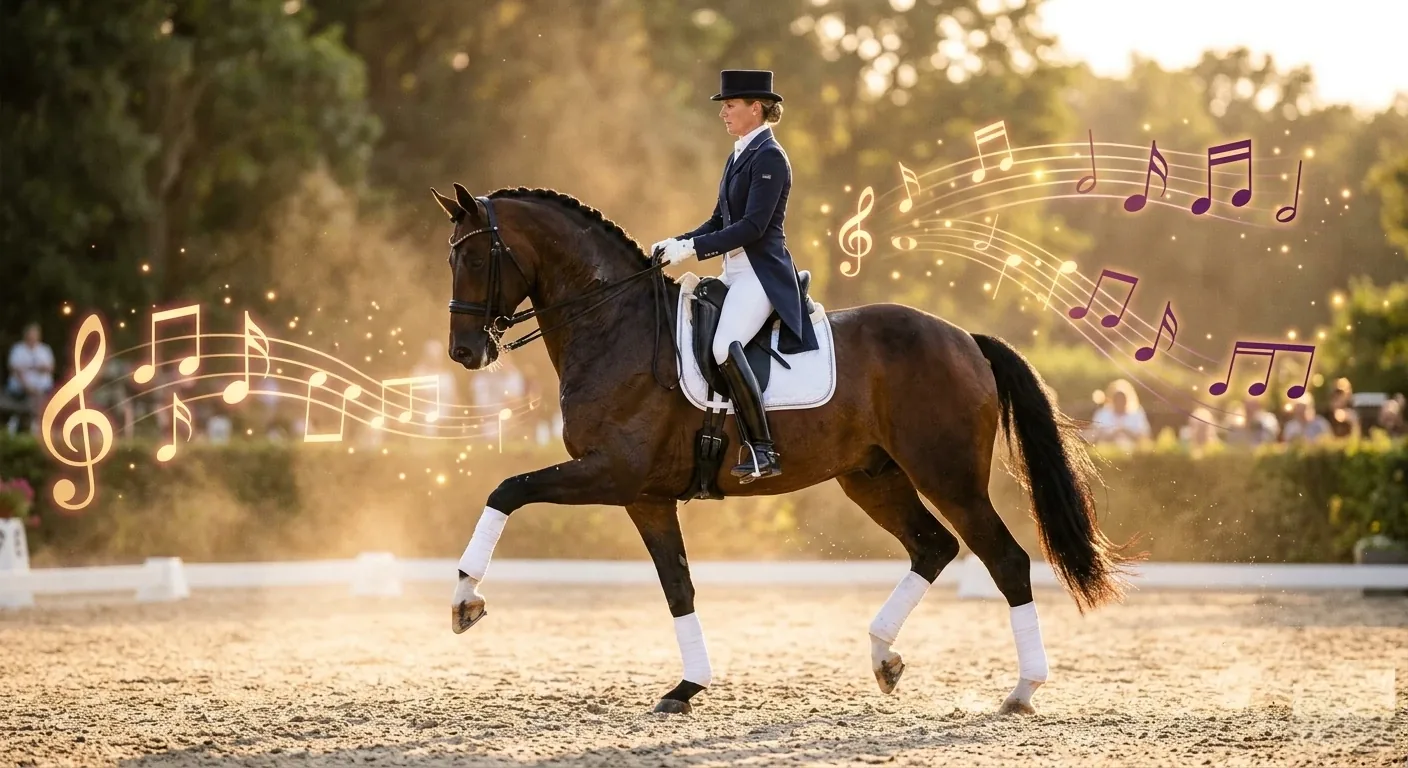
Whatever you choose, the music can never feel like background. No wallpaper, no elevator music, that is the one unforgivable choice. The music is a character in the performance, as much as the horse, and it has to earn attention from the first note. Small or big, light or grand, it needs presence. It should pull the eye to the arena and keep changing as the test changes, never settling into something the audience stops hearing.
That is why the music has to move. A freestyle cannot sit at one intensity from the first halt to the last, it wears out the ear and wastes your best moments. You want light and shade, lows that set up peaks, the same way your test has collected and extended work. The Interpretation mark on the score sheet rewards exactly this, the use of phrasing and dynamics, music that rises and falls with the ride. Save the biggest moment for the movement that earns it, often the final extension or the last centerline, and let the quiet passages make it land. When you shortlist tracks, choose ones that have somewhere to go, not a loop stuck at one volume.
Then it has to be edited cleanly. The score sheet rewards seamlessness, smooth cuts and transitions with no dead air and no jarring fades, and you never cut a piece of music in the middle of a phrase. This is the part most riders cannot do at home, and it is most of what a studio is actually for.
By level, roughly
The brief does shift as you climb, but less than people think, the principles above hold at every level. What changes is how much the music can carry.
At the lowest levels, Introductory and Preliminary, keep it fun and light, especially with ponies and younger riders. Short test, few movements, no need for drama, the goal is a happy, relaxed, rhythmic horse and music the rider loves. From Novice up to Medium you have three paces and room to build a clear theme, but keep it supportive, not dramatic, the test is still about correctness and rhythm.
Drama earns its place from Advanced Medium up, and only if the horse can carry it, back to the first rule, what you hear has to match what you see. Single changes, pirouettes and the FEI work give you real moments to phrase to, and the instrumentation can grow. At the top, Inter I through Grand Prix, the music can be at its biggest and most orchestral, with the passage and piaffe tour and a final centerline to build toward.
The short version: do's and don'ts
Do
- Start from your horse's tempo, then find music you love inside it.
- Match the music to what the judge sees, big sound for a big mover, lighter for a lighter horse.
- Give each pace its own character, held together by one theme.
- Choose music that moves, lows and peaks, building to the moment that earns it.
- Reach for orchestral instrumental covers, so the melody stays and the language barrier goes.
- Edit it cleanly, no cuts in the middle of a phrase, no dead air.
Don't
- Pick the song first and force the horse to fit it.
- Copy a track that won someone else, it fit their horse, not yours.
- Put grand music on a modest horse, or delicate music on a powerhouse.
- Stitch together a pile of clips with no single theme.
- Settle for background or elevator music, ever.
You do not need a quote to start, the price for every level is published. See the full pricing by level, or browse the music library to hear the kind of tracks we build with.