The judge cannot see the work you put in. They can only see the ride in front of them, and hear the music under it. Your whole job in the ring is to make those two things one.
You have the music. You have the choreography. The last piece, the one that actually wins or loses marks, is how you ride it on the day. The good news is that a freestyle gives you more room to ride well than any set test, if you know how it is judged and you know your music by heart. Here is how to use that room.
Know how a freestyle is judged
A freestyle score has two halves. The first is the technical part, a mark for each movement, the score you already know from your standard tests. The second is the artistic part, marks given on the test as a whole and weighted heavily. Two of those artistic marks are about the music, and on the FEI sheet each carries a coefficient of four, so they count for a lot:
- Music — does it suit the horse, the tempo, and the level.
- Interpretation of the music — the big one, and the heart of the whole thing.
Here is the part most riders never realise: the judge does not know your choreography. They do not have your test written in front of them. They have the list of movements you must perform, and that is all. So they cannot reward a clever pattern they cannot see coming. What they can see, and hear, is whether your riding matches your music. That match is what the artistic marks reward, and it is almost entirely in your hands on the day.
Interpretation is the heart of the freestyle
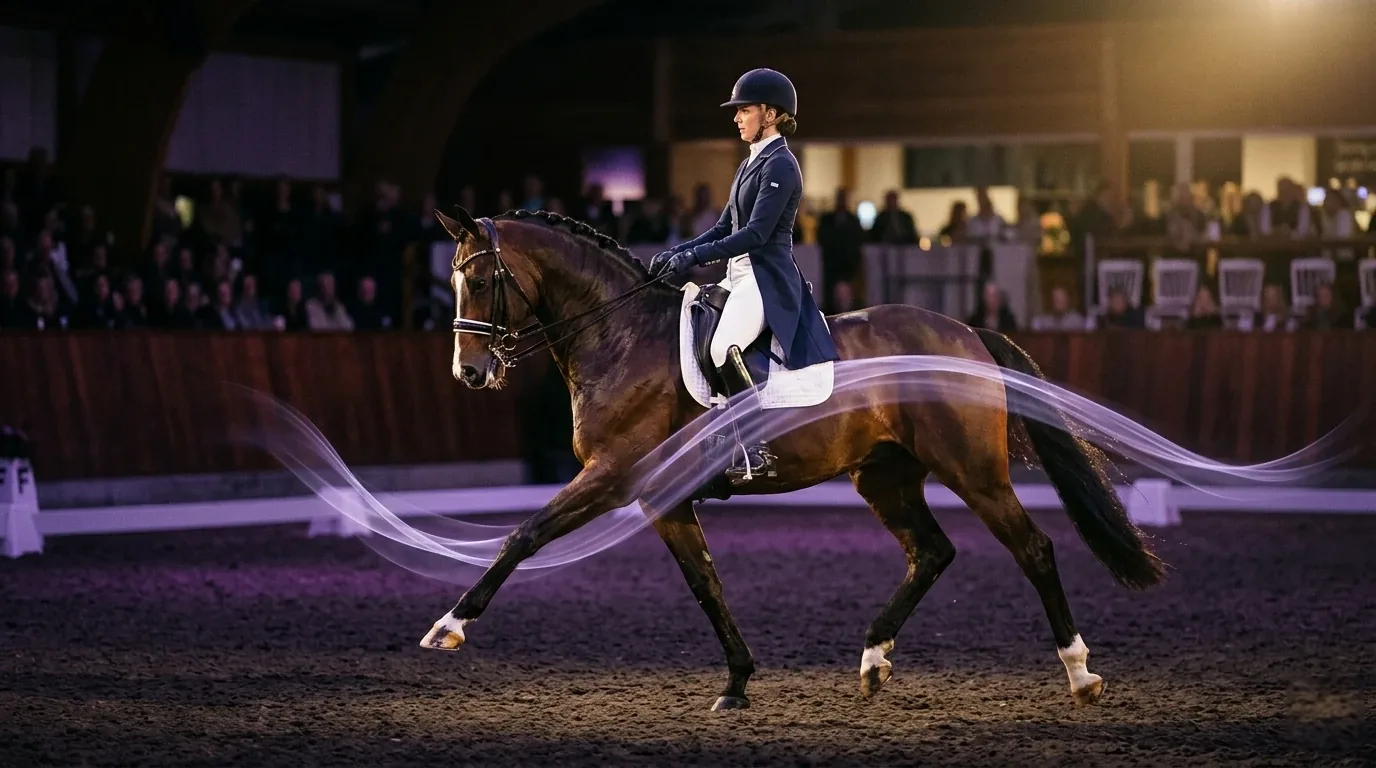
Interpretation means one simple thing: what the judge sees matches what they hear. When it lines up, the ride reads as a single piece of music and movement. When it drifts, even lovely riding looks slightly off. Three things to nail:
- Change gait with the music. The transition in the music and the transition between paces happen together, not a beat before, not a beat after.
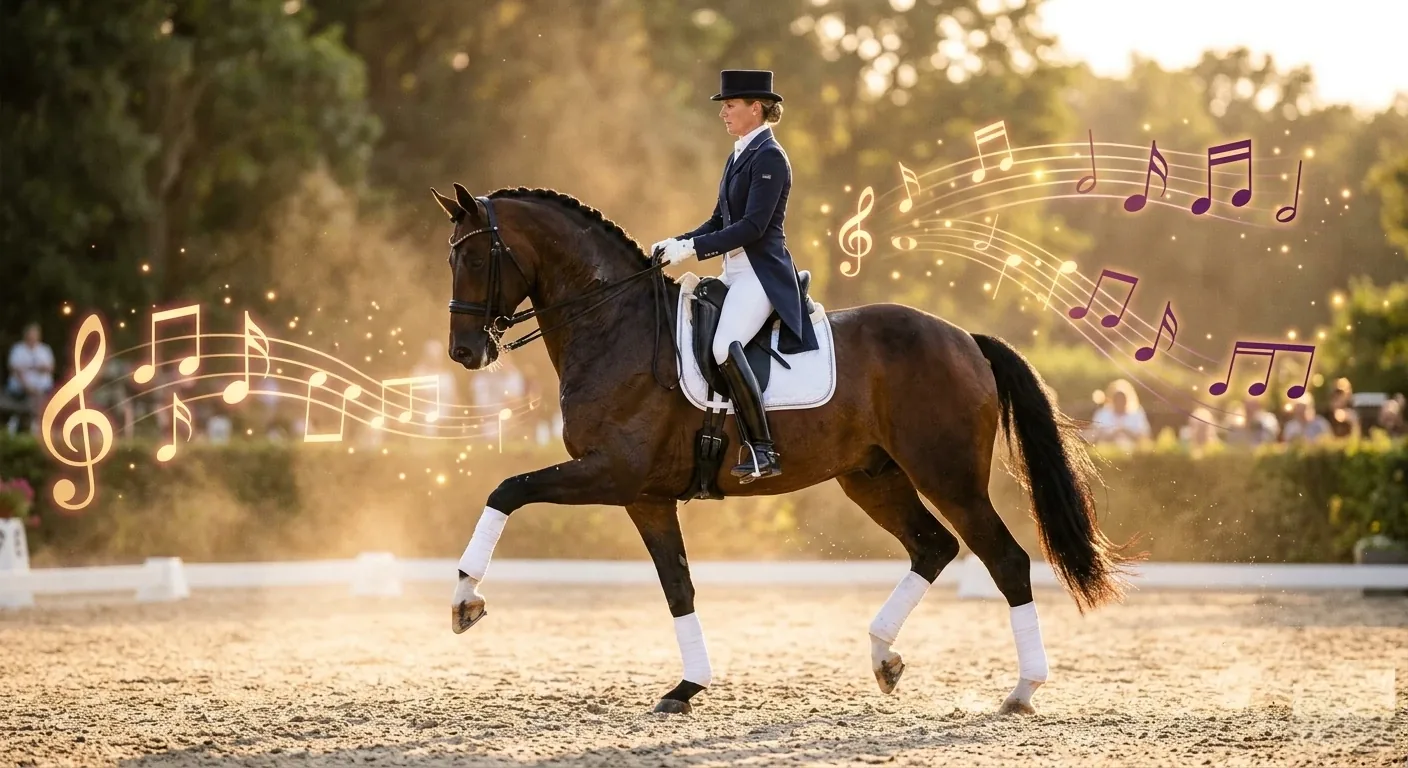
- Let the music fit the movement. The music lifts under the extension, settles under the collected work, carries the character of whatever you are showing.
- Halt on the music. Your final halt lands exactly where the music ends.
Get those three landing and you are most of the way to a strong interpretation mark, whatever else happens.
Know your music by heart
None of that is possible unless you know the music better than you know the test. Listen to it again and again, until at any second you know two things without thinking:
- Where you are relative to the music, ahead of it or behind it.
- Which movement belongs to this moment.
You should be able to hum the whole thing and feel where every transition falls. That is not memorising a playlist, it is what lets you make decisions in real time when the horse does something you did not plan.
Ride the horse you have on the day
Because here is what happens at shows: the horse changes. The same horse that floated at home can come out stickier or hotter under the lights. Your job is not to ride yesterday's horse, it is to ride the best version of today's, and keep it glued to the music. The tool for that is geometry.
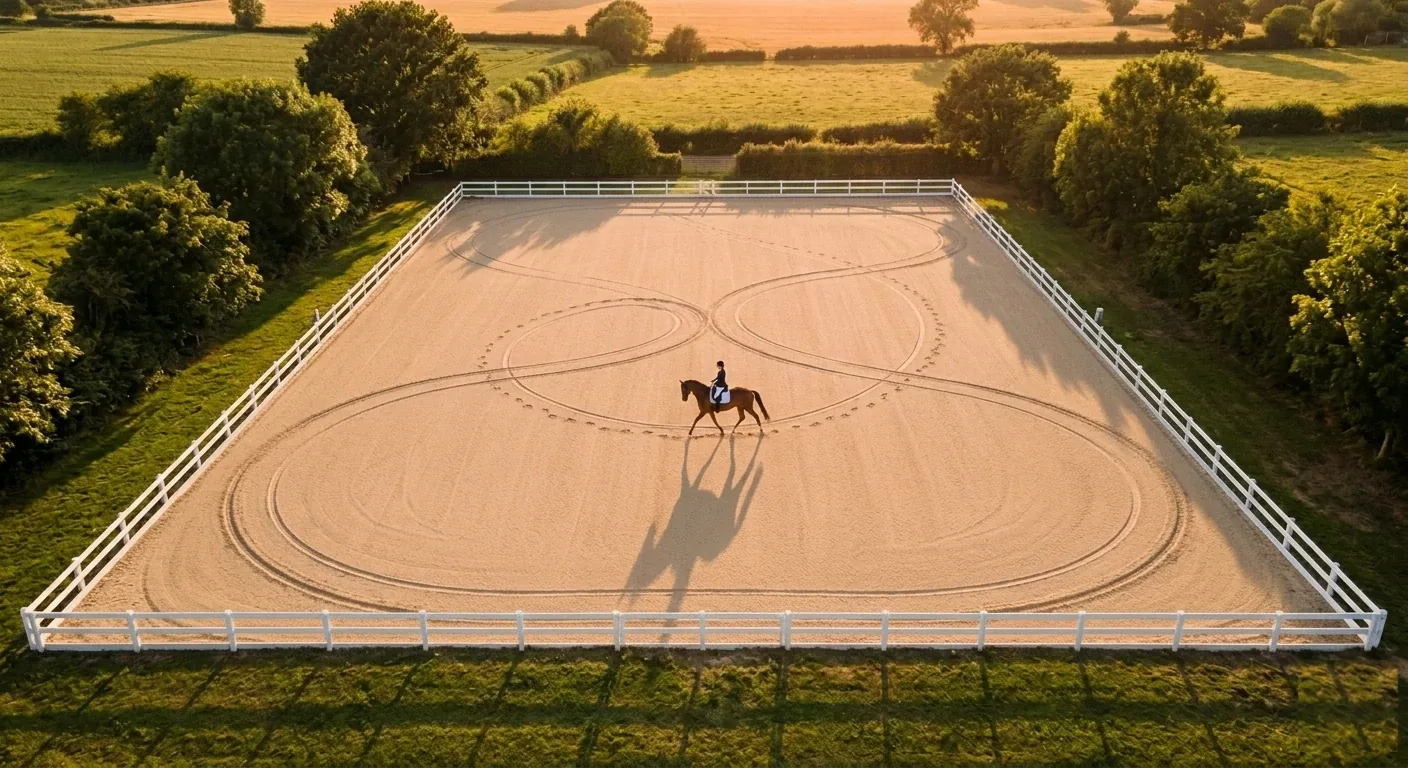
- If the horse is stuck and you are behind the beat, buy time back. Round off your corners, or do not ride all the way to the end of the long side. Shorten the path and you catch up to the music.
- If you are ahead of the music, spend time. Ride deeper into the corners, or even add a small circle, if you know you have the time for it. Lengthen the path and the music catches up to you.
These are tiny adjustments, and that is the point. Done calmly, no one watching knows you made them. You just stayed with your music while the horse did its own thing.
Never ride worse to fit the music
One warning, because it is the most common way riders cost themselves marks. Everything above adjusts your path, never the horse's rhythm. Dressage is a technical sport first, and the quality of the gait is what the technical marks reward. The moment you shorten the trot or hold the horse back just to land on a beat, you have traded a real mark for a small one. The music flatters the horse, the horse does not bend to the music. Ride the best gait your horse has. A freestyle built right already sits under it, and where it does not quite line up, you fix that with geometry or in the edit, never by riding the horse worse.
The most important thing: ride it like you meant it
This is the tip that wins freestyles. The judge marks what they see, and a freestyle gives you room to recover. I have watched riders win championships on a circle that was never in the plan, ridden for one reason only: they knew they had the time to fit it, and they rode it as if it had always been there. Calm, deliberate, unhurried.
So if something slips, do not flinch and do not telegraph it. Ride the recovery like it was the plan all along. A panicked correction costs you marks twice, once for the slip and once for the panic. A confident one often costs you nothing.
If you don't show that it's a mistake, no one will think it's a mistake.
The short version: your show-day checklist
- Know your music by heart, every transition and the final note.
- Change gait on the music, not around it.
- Land your final halt exactly when the music ends.
- Read the horse on the day and adjust geometry, round corners if you are behind, add a circle if you are ahead.
- Ride every change, planned or not, as if you meant it.
A freestyle that is built right is built to be ridden right, the tempo sits under the horse and the big moments fall where the music wants them. If you want music that is genuinely easy to ride to, that is the whole job we do. Read how we choose the music and build the choreography, see the services and pricing by level, or just send your video and we will take it from there.